Wills & Trusts
Where to keep the documents
A will that cannot be found is treated as revoked in many states, which makes storage a legal question rather than a housekeeping one.
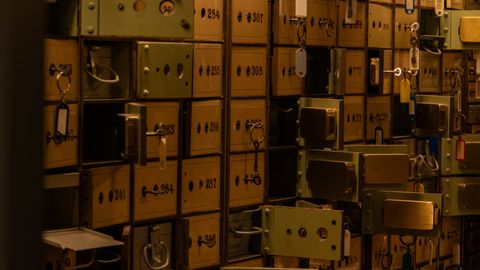
Careful drafting achieves nothing if the original document cannot be produced. Where and how it is stored is a substantive part of the plan.
Why the original matters
Probate courts generally require the original will, not a copy.
In many states, where a will known to have been in the testator's possession cannot be found after death, a presumption arises that it was destroyed with the intention of revoking it.
Overcoming that presumption to admit a copy is possible in some jurisdictions and requires evidence, expense and time.
Which means a lost original can effectively undo the entire plan.
The options
The drafting attorney's safe. Common practice, secure, and it means the document is with someone who knows what it says.
The risks: the attorney retires, moves, dies or closes the practice, and the family does not know where to look.
Where this route is used, the family should know which firm holds it, and the arrangement should be checked periodically.
Deposit with the probate court. Several states permit a will to be deposited with the court during the testator's lifetime for safekeeping.
Secure, permanent, and it removes the risk of loss entirely, though retrieval to make changes involves a procedure.
A home safe. Practical if it is genuinely fireproof and waterproof, and if someone else knows the combination.
A locked box that nobody can open is a common and avoidable problem.
A safe deposit box. Widely used and carrying a specific difficulty.
The safe deposit box problem
Access after death depends on how the box is titled and on state law.
Where the box is in the deceased's sole name, banks generally will not permit access without court authority — which requires the will, which is in the box.
Several states have procedures permitting limited access specifically to retrieve a will, sometimes with a bank officer present and an inventory taken.
Some states seal boxes on notification of death, historically for tax reasons, which delays access further.
Where a box is used, having a joint holder or ensuring the state's retrieval procedure is understood in advance prevents the circular problem.
What should be where
A workable arrangement.
Original will: with the attorney, deposited with the court, or in a fireproof safe at home whose location and access are known.
Original powers of attorney: accessible immediately, because they are needed at short notice and a document locked away is useless.
Copies should be with the named agents and, for healthcare documents, with the physician and any hospital.
Trust documents: with the trustee and successor trustees.
Deeds, titles, policies: a fireproof safe or safe deposit box, with the location documented.
The master document listing accounts, professionals and locations: somewhere easily found, and with a copy held by the executor.
Digital access information: in a password manager with emergency access configured, rather than in a document.
Copies
Worth distributing more widely than most people do.
The executor, the named agents and the attorney should each have copies of the relevant documents.
A note on each copy stating where the original is held prevents confusion.
Digital scans stored securely and accessible to a trusted person are worth having as a backup, particularly for identifying what documents exist.
Telling people
The step that makes all of the above work.
The executor should know they are named and where the will is.
The agents under powers of attorney should have their documents.
The family should know who the attorney is.
A surprising proportion of estate difficulty comes from documents that exist and cannot be located, and a single conversation prevents it.
Old versions
A specific point.
When a new will is executed, previous originals should generally be destroyed, since the existence of multiple documents invites argument about which is operative.
The attorney will normally handle this, and it is worth confirming that copies held elsewhere — with family members, for instance — are collected or clearly marked as superseded.
General information only, not legal advice. Rules on lost wills and safe deposit access vary by state — consult a qualified attorney.
Also by Victor Nunes
- Common estate planning mythsFamily & Disputes
- Sibling relationships after a parent diesFamily & Disputes
- When an executor gets it wrongProbate
- Mediation for estate disputesFamily & Disputes