Beneficiary Designations
Unmarried partners and what they are not entitled to
Long cohabitation creates almost no automatic rights in most jurisdictions, and the belief that it does causes real harm.
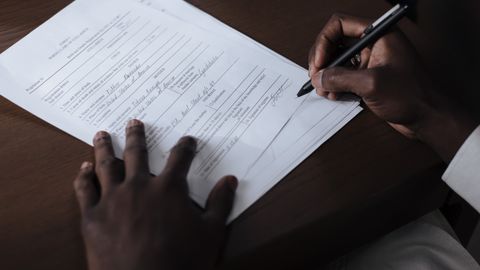
A widespread belief holds that living together for long enough creates something like marital rights. In most places it does not, and the consequences fall entirely on the surviving partner.
The default position
Intestacy statutes distribute to spouses, children, parents and other relatives.
An unmarried partner is generally not included, regardless of the length of the relationship, whether a home was shared, or whether they were financially dependent.
Which means without planning, a surviving partner may receive nothing while distant relatives inherit.
They may also have no right to make funeral arrangements, no right to information from healthcare providers, and no authority to make medical decisions.
Common law marriage exists in only a small number of states, generally requires specific elements beyond cohabitation, and is frequently misunderstood as arising automatically from a period of living together.
The practical consequences
Housing. Where the home was owned solely by the deceased, the surviving partner may have no right to remain.
Assets. Bank accounts, investments and personal property pass to relatives.
Retirement accounts and insurance, which pass by designation and are therefore the easiest to address and the most often overlooked.
Medical decision-making, where without documents the partner may be excluded in favour of relatives.
Hospital access, which has improved through regulation and can still depend on documentation.
Funeral arrangements, which in many states are controlled by next of kin.
Accounts of partners excluded from hospitals and from funerals by relatives are not historical curiosities; they continue to occur.
What to put in place
All of it is straightforward and none of it is automatic.
A will, naming the partner, which is the foundational document.
Beneficiary designations on retirement accounts, insurance and financial accounts.
Note that many workplace retirement plans require a spouse to be named unless they consent, which does not apply to an unmarried partner — the designation simply governs.
Healthcare power of attorney, naming the partner explicitly.
Without this, relatives generally have priority.
Financial power of attorney, similarly.
Property titling. Joint ownership with rights of survivorship passes the property automatically, which is the cleanest solution for a shared home.
The alternatives — a life estate, a right of occupation in a trust, or an option to purchase — suit situations where the property is ultimately intended for children.
A cohabitation agreement, setting out what each person owns, what is shared, and what happens on separation or death.
Designation of who controls funeral arrangements, which many states permit by a specific document.
Guardianship nominations where there are children, particularly where one partner is not a legal parent.
The children question
A specific and serious issue.
Where one partner is not a legal parent of the children — not biological and not having adopted — they have no automatic rights on the other's death.
Children may go to relatives rather than to the surviving partner who raised them.
Second-parent adoption, where available, is the definitive solution. A guardianship nomination in the will is a partial one.
This is worth addressing formally rather than relying on the assumption that arrangements will continue.
The tax difference
Worth knowing, because it changes the arithmetic.
The unlimited marital deduction does not apply. Transfers to an unmarried partner at death are potentially subject to estate tax without that shelter, and lifetime transfers use gift tax exemption.
Portability is unavailable.
Inheritance taxes in the states that levy them frequently tax unrelated beneficiaries at the highest rates, and an unmarried partner is generally treated as unrelated.
Retirement account rules are also less favourable, since the spousal options are unavailable — though a partner within ten years of the owner's age may qualify for more favourable distribution treatment.
The conversation with family
Worth having.
Where relatives may be surprised or unhappy about provision for a partner, explaining the intention during life reduces the likelihood of a challenge and of a dispute over practical matters at the worst moment.
Documentation of the relationship — shared accounts, correspondence, photographs, a cohabitation agreement — also has evidential value should anything be contested.
General information only, not legal advice. Rights of unmarried partners vary substantially by state — consult a qualified attorney.
Also by Margaret Ashcombe
- The letter that goes with the willFamily & Disputes
- The family meeting about the businessBusiness Succession
- The annual review nobody schedulesBeneficiary Designations
- Disinheriting someoneFamily & Disputes